
Announcement · Archived
3 Oct 2025
New report on clean cooking in Uganda
More than 98% of Ugandan households still rely on biomass and charcoal for cooking while only less than 1% use electricity as a primary cooking fuel. (WHO 2020)
The Ugandan government has made eCooking adoption a national priority and has set ambitious targets for its adoption. The Electricity Regulatory Authority implemented new e-cooking electricity subsidies, Uganda’s main customer-facing electricity distribution company Umeme distributed 1,500 electric pressure cookers (EPCs), and a national electric cooking strategy has been drafted.
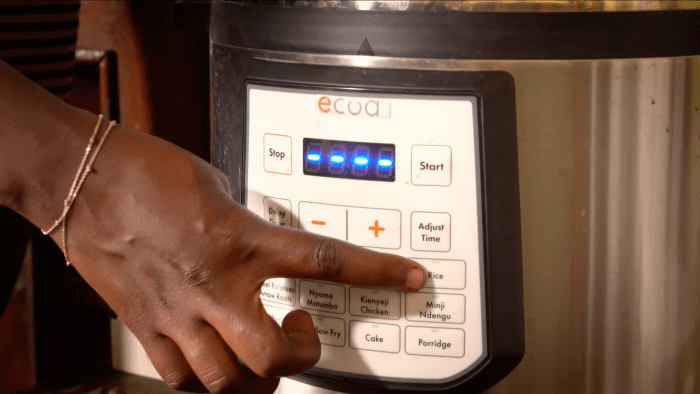
The report “Findings from a Study on the Adoption of Electric Pressure Cookers in Uganda” involved gathering data from 500 households who had received an EPC from Umeme. The study, conducted over a period of 12 months, gathers data from surveys, smart meters, and household electricity billing. It focuses on understanding the effects of the adoption of EPCs on biomass fuel consumption, cooking time and labor, household electricity demand, as well as the relationship between appliance usage and electricity pricing.
The research was led by Elliot Avila from A2EI with funding from the Global Energy Alliance for People and Planet. It was implemented in partnership with the Centre for Research in Energy and Energy Conservation at Makerere University in Kampala, in collaboration with Umeme, and with the support of the Modern Energy Cooking Services programme.